The Threads That Bind Us: Celebrating the Symbolism of the Damara Horokhoes
Every fold of a traditional dress tells a story; every stitch carries the breath of our ancestors. For the Damara people (ǂNūkhoen), our traditional attire—the Horokhoes—is much more than beautiful fabric. It is a living archive of our history, our social structures, and our identity.
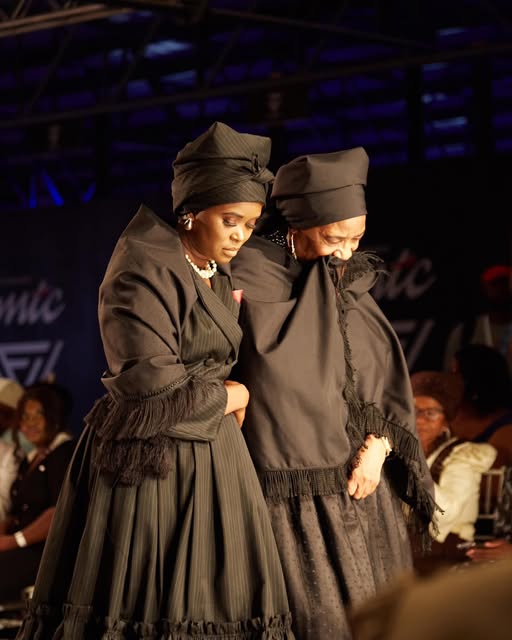
Established in 2011, The ǂNīsa Damaradi |Ae||gams has dedicated itself to protecting, preserving, and restoring these profound cultural practices. The Damara dress is a prime example of why this mission is so critical. Did you know that the Horokhoes changes depending on a woman’s stage of life? Traditional attire differentiates a young girl from an unmarried woman, a married woman from an elder. Furthermore, specific rituals dictate how our headpiece, the !khaib, is tied. For instance, according to strict custom, only a widow or the highest remaining elderly lady in a family’s hierarchy is permitted to tie her !khaib to the back—serving as a visible, spiritual connection to our ancestors.
Recently, our traditions took center stage nationwide with the introduction of the !Nâu-rokhoes (mourning dress) and the special pinstriped presidential Damara dress, honoring the late President Hage Geingob’s legacy. When the Aukoredi delegation visited and presented the traditional black mourning attire (!Nâu-rokhoes, !khaib, and kalib shawl) to the former First Lady, it wasn’t just a gesture of solidarity—it was an assertion of the resilience of Damara customs.
By wearing our Horokhoes with deep appreciation and historical understanding, we shield our heritage from falling into oblivion. We invite the entire community to celebrate these vibrant garments, not just as outfits for special ceremonies, but as symbols of empowerment, unity, and an unbroken link to our past.
Reflection Point: What does wearing your traditional Horokhoes mean to you? Share your photos and stories with us using the hashtag #AukorediHeritage.